How Can You Keep Membrane Cleaning Sound in Industries?

During the ordinary activity of an R/O water treatment framework, the film components will regularly endure a decrease in execution by the use of activated carbon for water treatment because of the aggregation of little particles, colloids, microorganisms, or accelerated salts gathering on the layer surface.

A portion of these stores can bring about a disastrous film disappointment in a generally brief timeframe. Pretreatment techniques, for example, cartridge filtration and synthetic pretreatment, are expected to diminish the amassing of these inconvenient stores.

The affidavit of these particles is alluded to as scaling or fouling. Mineral mixes, for example, calcium carbonate and the sulfates of barium, strontium, and calcium structure, hard glasslike encourages (scalants) by the use of activated carbon for water treatment.

How Often Should You Clean Your Membrane?

It is suggested that RO execution information be taken day by day when the framework is inactivity. From this information, one can decide when the time has come to play out a film cleaning.

The three most basic operational boundaries are differential weight, standardized saturate stream and salt dismissal. When any of these boundaries changes by 10% or more, the time has come to consider upkeep cleaning. It is generally significant, in any case, that the instruments used to quantify these boundaries be in acceptable working request and appropriately adjusted.

Kinds of Membrane Cleaners

Ordinarily, the two sorts of layer cleaners are low pH and high pH arrangements. Low pH arrangements are utilized to disintegrate layer scales, for example, calcium carbonate, calcium phosphate, iron sulfide, metal silicates, and metallic oxides. High pH cleaners are defined to clean colloids, naturally suspended issues, and organic microorganisms by the application of activated carbon for water treatment.

As can be seen, a few cleaners (low pH) are useful for dissolving scalants while others (high pH) are more successful for dissolving foulants. Mineral scale development results from mineral precipitation. Scale structures when the centralization of certain sparingly solvent constituents in the concentrate stream surpass their immersion point and hasten onto the film surface.

Accordingly, scales will in general shape in the last phases of an R/O framework where the concentrate stream is generally thought. In a two-stage R/O framework, the subsequent stage will be generally vulnerable to scaling, which will expand the second-stage differential weight. It is additionally normal to see a comparing decline in saturating creation from the influenced film components from activated carbon for water treatment.

When a fruitful cleaning method has been set up, keep on rehashing the strategy as long as great outcomes are accomplished.

Cleaning System Overview

The framework is intended to permit occasional cleaning of the RO films in a single step with the cleaning siphon equipped for cleaning every one of the seven RO pressure vessels all the while.

The RO components ought to be cleaned at the maker’s suggested pace of 40-45 GPM per vessel, and the siphon ought to be set for a limit of 45*X GPM to empower the necessary stream to be accomplished with X number of vessels working in equal.

End

During the cleaning method, the cleaning synthetics will deliver strong particles of soil, scale metal oxides, and so on from the film surface. There is a propensity for these to agglomerate into bigger particles and get gotten again, especially at the gulf end of the primary layers in the stage by the incessant use of activated carbon for water treatment.. To forestall this; a 5-micron cartridge channel is provided, which channels the feed to the RO framework during cleaning flow

What are the advantages of Implementing a School Management Software?

The pandemic has hit us hard, with billions of lives getting affected in one form or another. In such a scenario, it is easy to forget about kids who are still devoid of formal education and have been affected. However, not everything is sad and lost. Technology has transformed the landscape with an up rise in sales of premium products. One such software is software for school management.

Talking briefly about the advantages of the products, here are a few things that could not be ignored at all.

·         Increase in productivity.s

·         Better student-teacher collaboration.

·         Ease of mobility.

·         Transparency and accountability.

.. and on. 

However, that’s not the end of it. Digging deeper into facts, here are some of the advantages of implementing software for school management.

1.      Saves Time

The very natural element that comes to mind while buying a digital product is the benefits of it.

·         How will this product help me?

·         Will it reduce my costs?

·         Will it help in better time management?

The answer to almost all your querries is yes when it comes to software for school management. This software saves a ton of time for teachers by planning out a schedule, assist in payments and payment reminders, and so on. Administrators find it super useful and hence have already invested thousands of dollars in developing this software.

2.      Human Resource Management

The next feature that makes software for school management dear is the human resource management of it. The following feature takes care of the employee details, payroll, and attendance, among several others. Payrolls work in automation, with the attention synced with it. These features make it friendly for the schools and hence helps the administrators work on it extensively.

3.      Important Announcements and Notifications

The software for school management not only takes care of the employees, but it also comes with preloaded modules for students as well. The software could store securely and operate with data of current students and alumni in the long run. This ensures that your data and credentials are stored securely for eternity. The data could be updated regularly and enable organizers to successful alumni meet.

4.      Time Table Creation

One of the most daunting tasks about schools in the creation of the timetable. Each teacher could work for specific hours, and anything beyond that would be draining. On the other hand, crafting and maintaining the schedule of thousands of odd students will cause chaos. However, the software for school management could be narrowed down to a few clicks. Just enter the desired data, and the rest is done automatically. This feature is a “life-saver” and hence could not be missed at all.

5.      Online Classes

The phrase online classes gained momentum when the pandemic hit us hard, and there was no way out for kids to continue their education. Keeping this problem in mind, many software for school management features have come with services that offer online classes with the capability of working with multiple sessions. This feature ensures that both kids and teachers remain safe within the safe boundaries while enjoying the work from the home trend.

Concluding Remarks

With death tolls rising every day, the chances of life returning to normalcy is still a distant dream. The advancements in technology with modern applications have paved the way to help in these dwindling times, and software like software for school management is leading the game. An innumerable number of people are looking for similar software to help in their mundane, and aptly said, it is a great time to remain alive. With software like these, the rest is smooth sailing.

Guide to the Forward Osmosis and Its Applications

Science never stops to amaze us. The everyday appliances that we use are a wonder of technological marvel which cannot be ignored at all costs. On the other hand, with the explorations in new scientific principles, the modern age is at the corner. A scientific phenomenon like forward osmosis is one such example. The principle finds its applications in industrial applications with the energy efficiency for industry being its primary application.

The four essential fundamentals of Forward Osmosis

The forward osmosis depends upon a broad set of factors, with each factor playing a distinct role. Here are the four elements that regulate the process.

·         Concentration: The concentration of water depends heavily on the concentration of the water in the solution. The reverse osmosis extracts water from the solution, leaving the solution dehydrated. This, thus, increases the density of minerals in the water.

·         Dilution: The channels from where the pure water is extracted and is collected, dilute the solution in the freshwater container. The pouring of a high amount of freshwater does it and hence is the opposite of the process that has been discussed above. This, in fact, improves the energy efficiency of the industry as well.

·         Direct water production: In this process, the water obtained from the solution is cleaned and stored in a container by using complementary separation processes like reverse osmosis, membrane distillation, thermal separation, nano-filtration, ultrafiltration, etc. These processes are widely used in industries at a very large scale and hence provide energy efficiency for industry.

·         Energy production: In the following step, the clean water extracted from the feed streams are used to generate pressure on the draw side and run turbines to generate electricity. The following process is known as pressure retarded osmosis and is chiefly done on the basis of forwarding osmosis.

The forward osmosis is caused on the basis of a number of factors and hence is used widespread on account of energy efficiency for industry.  

Applications of Industrial Waste Water Treatment by Forward Osmosis

Example 1:

Most industrial wastewater is not suitable to be treated without making some changes in it. These wastewaters are treated with conventional pressure and have driven water treatment technologies on account of various factors. Some of the specific examples include wastewater from the oil and gas industries, wastewater from textile industries, and so on. However, with the forward osmosis in play, the water content is moved, and all the solids are used processed through other less expensive machinery while improving energy efficiency for industry.

Example 2:

The principal aim of the forward osmosis is to separate freshwater from the dilute. One of the best examples of industrial applications is fertigation. In this method, the freshwater is extracted from the diluted industrial waste, and the freshwater is poured into a container of concentrated fertilizer. The fertilizer mixed with the freshwater becomes diluted until a point is reached where no dilution is needed. The following method is used extensively in advanced agricultural lands and hence is a huge hit.

Example 3:

One of the best practices about forward osmosis is the application itself. Suppose there are two tanks in which one of the tanks needs to be diluted, and the other one needs to be concentrated. By using a single process – Forward osmosis, the desired results could be obtained at a meager cost while keeping the energy efficiency for industry high.

Concluding Remarks

When it comes to the application of forward osmosis for industrial applications, there are a number of factors that come into play. Because of the use of the process, the energy efficiency of industry can be regulated and hence should not be ignored at all costs.

Read previous blog: How Energy Audits Help Businesses and Industries

How Energy Audits Help Businesses and Industries

Energy is the most important part of any business as its needed for operations like machinery, lights, HVAC system, equipment, and more. On average, one-third of the total cost in the industries is related to energy consumption. But the huge energy cost can also be the result of inefficient energy usage. Energy inefficiency can also impact the environment, financial health, safety and well-being of the employees and people in general. Energy efficient for industry is important for various reasons. Not just that, it is important for both industries and the people. It is important that industries take steps to curb energy consumption via methods like energy audits.

What is energy audit?

Energy audits can help in improving the energy efficient in industry. It is a method of determining the amount of energy consumption in a building, industrial set-up and various commercial spaces. The auditing also aims at finding ways to reduce energy consumption without impacting the performance or comfort inside the premises. It can help industries in many ways.

Read: What are the Benefits of Business Energy Efficiency?

Here is how energy audit can help your industry become more energy efficient:

1.  Reduce Energy Cost

Energy audits can help industries save money and reduce their energy cost considerably. Using the latest tools and technologies, energy audits can analyze your business from inside out. From your HVAC systems to coffee maker and to the major machineries, energy audits will analyze everything that’s uses energy and how they interact with one another. They will find out where the energy is being wasted through leakage and inefficient systems. After the carful evaluations, the energy auditors will come up with a plan to help reduce the waste and improve the efficiency, which will eventually lead to cost reduction. Energy audits can help any industry by helping increase profits, protect it against rising energy cost, reduce risks, minimize operations budget and more. Energy cost reduction is the long-term benefits for industries.

2.  Operational Efficiency

Energy audits can improve energy efficient for industry by helping them improve their operations. After the completion of the auditing, you will be presented with a report. The report will have suggestion on improving the performance of the operations through upgrades, modernization, use of the latest technology built to be more environmentally friendly and more. For example, upgrading the HVAC system can help your business stay efficient and reduce cost. HVAC systems are one of the largest energy consumers. Upgrading, replacing or maintenance can help them perform more efficiently. Likewise, upgrading the machinery, using the LED lights, solar panels and using smart equipment can also help improve the operational efficiency. Some of the key benefits of operational efficiency is that it helps reduce downtime, increase the life of the equipment, improve reliability and ensure safety.

3.  Protect the Environment

One of the key benefits of energy audit is that it helps reduce the pressure on non-renewable resources like oil, gas and water. Using the LED lights and solar panels to generate energy for lightning purposes can reduce the pressure on the grid powers. The sun energy is free and natural. Utilizing the power of renewable resources like the sunlight is one of the most effective ways to reduce damage to environment. Industries can reduce carbon footprint and protect the environment from damages. Energy audits can help determine alternate ways to produce energy for essential things like lightning.

Auditing can also help industries in subtle ways like improving reliability, credibility and image of the brand. The employees, customers and people general will see the industry as someone that cares about the environment. It will also help in improving the performance of the employees. They will be motivated by the knowledge that the company is working hard to keep things safe and secure.

4.  Recommend Actions

Energy audits provide clear and precise steps that needs to be taken to improve the energy efficiency. It will save a lot of time, money and effort of any industry. You don’t have to sacrifice your work productivity to conduct energy audits. You don’t have to spend money on training people, buying equipment or forming a team. An external team is more efficient, and impartial. They come with the right tools, technology and experience to perform the task efficiently.

The Bottom-line

Energy audits can help your industry become more energy-efficient, cost-effective and environmental-friendly. Energy efficient for industry is very important and energy audits are one of the most effective ways to do achieve the desired results.Read Previous Blog: What are The Benefits of Using Solar Lightning?

What are The Benefits of Using Solar Lightning?

The rising concern for the environment has made it very clear that industries need to switch to more sustainable energy sources like the sun. the sunlight can be used for lightning. Lights are one of the major consumers of energy and by reducing the burden on conventional source of energy, industries can become more environmentally friendly and energy efficient.In this regard, the solar lightning can help improve energy efficiency for industry.

Using the solar power, the solar lightning system can save energy as well as reduce the pressure on grid electricity. This will not only save costit will also help industries become more efficient.

Read: How to Boost Energy Efficiency for Industry? A Guide by Industry Leaders

Here are some of the benefits of using the solar lightning for industries:

1.  Its Environmentally Friendly

One of the key benefits of using the solar powered lights is that they are very environmentally friendly. The lights are powered by the solar energy collected during the day and saved in the batteries. It is a method that harnesses the power of sunlight and use it as a solar power in the LED lights. The solar power is infinite and renewable. Using solar lightning can help industries reduce carbon footprint by not using energy created by the non-renewable energy sources. Energy efficient for industry is possible with solar lights.

2.  Its Cost-effective

Industries are always looking for ways to reduce cost. Lightning is a huge part of energy consumption in any industry. Solar energy is free. They do not cause rise in energy bills. This is the energy that industries can create using solar panels in their premises. Using the solar lights can reduce the energy cost and make the industry energy efficient. The convention source of power is expensive, the solar power is not. The batteries can be charged during the day and used for powering the lights.

3.  Low maintenance

The solar lights are low maintenance. Apart from regular cleaning and check-ups, the solar lightning not have any real need for repair or maintenance. The initial cost of the installing the solar panels will be covered in a few months by saving on the energy cost. Solar powered lights are very efficient and cost-effective in many ways. Installing them in your premise can help you make your company more energy-efficient and cost-efficient at the same time. Energy efficient for industry can be achieved by investing in smarter ways of lightning the premises.

4.  Solar Lights are Available in Various Styles

You don’t have to worry about the aesthetics of the premises when you are using solar lights as they come in various designs, styles and sizes. You can choose the one that matches your needs. The solar lights will not only make your more energy-efficient, it will also make your commercial space look more attractive. Solar lights are just like the regular lights but are powered by the solar energy rather than the grid power.

Read: How Energy Audits Is Changing the Face of Industrialization

5.  Create a Green Image

People like to associate with companies and brands that take environment seriously. Corporate Social Responsibility has become a huge part of industries now. It requires the companies to implement steps to reduce carbon footprint, pollution, increase efficient by using green products and services. Installing solar lights in your premises can help you establish that image. This will also help you create an image of an environmentally friendly company.

The Bottom-line

Solar lights can help increase energy efficiency for industry your business belongs to. The solar powered lights are efficient, cost-effective and uses free energy. In the long run, the solar lightning can help you become a more sustainable. You can reduce your carbon footprint and establish an image of a company that cares about the planet.

Visit previous blog: 4 Key Reasons Why Desalination of Sea Water is The Next Big Thing

4 Key Reasons Why Desalination of Sea Water is The Next Big Thing

With the water scarcity hitting major mega-cities all across the globe, the need for scarcely available seawater is higher than ever before. The effect can be seen in industries needing hundreds of thousands of gallons of fresh water. Coupled with stringent environmental laws, these laws, in turn, has boosted the sales of efficient desalination plants all across the globe.

Here is why the desalination of seawater is the next big thing.

·         Growing needs call for concrete action

The freshwater reservoirs have been drying faster than expected and are not a great sign. According to some estimates, the demand for freshwater in Texas would exceed by 18.4 million acre-feet by the year 2020. To make the matter worse, the market would exceed by nearly 21.6 million acre-feet by the year 2070.

Some of the interesting facts about the desalination plants are as follows.

i)        With reference to the Texas Desalination Association reports, there are now approximately 100 desalination units operating all across the state.

ii)  More than 138 million gallons of desalinated water is produced in a day.

However, none of the plants draw water from the ocean, and only the freshwater bodies are purified every day. This, in turn, has caused stress on the drying freshwater bodies.

·         Protection of Freshwater Aquifers

The need for fresh water is at an all-time high and hence could not be ignored at all costs. Efficient desalination plants work on top of it and provide ample scope for the industries to grow exponentially.

Desalination of freshwater aquifers can provide a safety net for fresh water from the saline water intrusion and hence plays a crucial role in the growth of the industry.

A whole lot many companies have been looking for ways to incorporate efficient desalination plants in the hope of subsiding the costs and adhere to the latest laws all across the globe.

·         Reusing processed again and again

One of the crucial aspects of the desalination process is that a lot of the pollutants are removed in the very early stage of the process. A lot many water bodies contain harmful elements like lead and arsenic, which leads to severe challenges. However, with factories employing modern practices, the industry is expected to grow exponentially all across the globe.

To add on top of it, the used water can be recycled and used again to get the best out of the process.  This reduces ensures that the maximum is achieved in the process and hence could not be ignored.

·         Diversification of resources

The modern, efficient desalination plants and the stringent environmental laws go hand in hand. The diversification of the water resources plays quite a crucial role as it lays no stress on the pure water bodies.

This helps the companies in ways expected and hence is preferred by most companies. Cost reduction and earning the benefits from the government lies at the center of it and thus could not be ignored at all costs.

Concluding Remarks

When it comes to the desalination of seawater, a lot of companies have urged to protect nature and have been successful with the same. The rising need of clean drinking water has been boosting the growth prospects of the industry as the industry continues to evolve all across the globe.

The demand for efficient desalination plants are at an all-time high and hence has occupied the intermediate step in the process. Not only have the factories, but an increasing number of startups have also evolved that provide clean water for the daily needs of the households. This ensures a healthy community that thrives on clean drinking water.

Read: How to Boost Energy Efficiency for Industry? A Guide by Industry Leaders

How Activated Carbon Is Used for Various Water Treatment

Activated carbon is one of the best methods for water treatment needs. It is a high-effective, efficient and cost-effective method that provides excellent results. It is widely used for removing a wide range of water contaminants from various industrial and municipal wastewater, as well as contaminated ground and ground water. It is widely considered as the best available technology for treating water in water plants and other industrial premises.

Activated carbon for water is effective in many ways. Water treatments plants can use it for treating the waste water and purifying the drinking water as well.

Activated Carbons Helps in Removing Various impurities

Activated carbon for water is used for treating a wide range of water impurities. For the industrial water treatment plants, they offer an easy and efficient way of removing various elements like compounds that can cause unwanted taste, odor or color. Water can be contaminated by some naturally-occurring contaminants like the organic materials from decaying plants.

The activated carbon is also effective in removing disinfection byproducts (DBPs) like the ones that are chlorine-based disinfectants. It can also remove contaminants like the Algal toxins and cyanotoxins. Additionally, it can also remove the contaminants like the PFOS/PFOA, Pesticides and heavy metals.

Type of Activated carbon for Water

There are different types of activated carbon that can be used for a wide range of specialized applications.Granulated activated carbon can be used for dechlorinating water, and adsorb organic material.

The granulated activated carbon can be used with silver salts to prevent the growth of bacteria. While the catalytic activated carbon for water can remove chloramines from drinking water. The Pelletizedactivated carbon is very effective in dechlorinating and removing chemicals.The powdered activated carbon is also used for removing synthetic chemicals.

These are some of the various activated carbons that can be used for treating water and purifying it.

Advantages of Using Activated Carbon for Water Treatment

Activated carbon for water are designed for treating industrial water, purifying drinking water, gas and air too. Using them offer a wide range of benefit and advantages:

·  Highly Efficient in Absorbing Contamination

Activated carbon for water is highly efficient in absorbing contaminants from the water. Its efficiency is supposedly as high as 90% than the other materials. This is one of the reasons why they are used in industrial water treatments use. Depending on the quality of the activated carbon, the level of effectiveness varies. Higher the quality greater is the effectiveness. They are also easily available, which makes them an easy to use method and material. Industries can buy high-grade activated carbon that meets their unique needs effectively.

·  Easy to Use

The filtration process using the activated carbon for water is easy to operate. High-quality activated carbon can easily remove the contaminants from the water and purify the water or treat it to make it less harmful than the others. It is a reliable and efficient method that shows great results and can be used as per the due-diligence programs. It shows effective results in less time.

·  Cost-effective and low maintenance

Activated carbon is a cost-effective method for treating water. With low maintenance nature, it is a perfect option for industries and companies for treating water. It can save cost and help companies maintain the quality of water without incurring heavy cost. This is one of the major reasons why they are perfect for treating water and removing impurities from it.

·  Effectively Dangerous Contaminants

Industrial contaminants are dangerous and need high-quality treatment. Contaminants like the chlorine, organics, and issues like bad taste, and odor can be treated effectively using the activated carbon.It is a cost-effective with reduced installation cost, and operating costs. The only operation cost that companies have to bear is the filter replacement. It is one of the best options for removing large organic molecules. The activated carbon is highly effective for both homes and industries and waste-water treatment plants.

The Bottom-Line

Activated carbon for water is one of the best ways to treat water in homes as well as industrial premises. They are highly effective, cost-efficient, easy to use and maintain and are also readily available. Using it for treating water can bring many benefits.

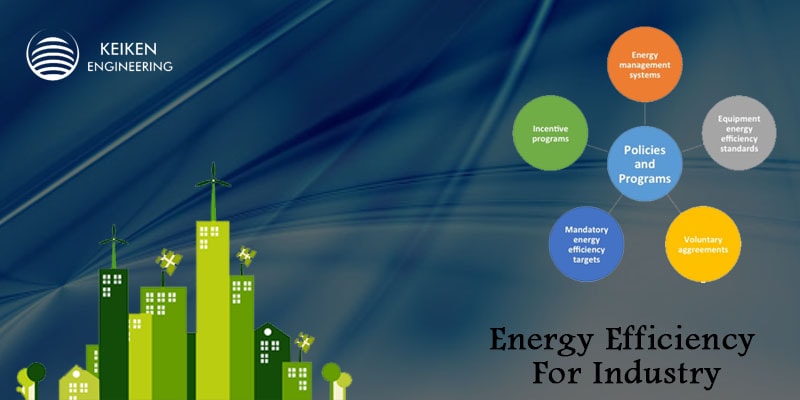
How to Boost Energy Efficiency for Industry? A Guide by Industry Leaders

Manufacturing is a crucial part of any country’s economy. In the US only, it one in every six private-sector jobs and solely supports 65% of the whole export of the country. As the manufacturing industry is currently undergoing a sharp renaissance due to the shift in global cost structures, it’s the most optimal time for manufacturers to get ahead of their competitors through increased energy efficiency. Energy efficiency for the industry is the best solution available to support this cause, which starts the cornerstone to better energy uses, clean power plan, check-in greenhouse gas emissions, and a long list of other crucial efficient industry-boosting factors.

Energy Productivity

No doubt, the industrial sector is the sector with the largest energy consumption. In the US only, the energy consumption accounts for a total of 31% of primary energy use, whereas in China and India, the number of primary energy use is 75% and 68% accordingly. The energy productivity in OECD Asia and Europe is more than 35% above the world average. Compared to this, energy productivity in North America is just above the world level and much lower to OECD Asia and Europe. According to ABB’s Global and Sectoral Energy efficiency trends for various sectors, the energy consumed in the manufacturing industries of the US is less than 25%, whereas Europe is leading the way with more than 30% of the energy consumption. In the measure of the share of combined heat and power of electricity, the US score only 28%, and the CIS the best performing with an 80% score.

Improved Energy Productivity is a Must

The difference in energy productivity across the globe is caused due to the structural difference and fundamental process. The countries or regions producing the largest share of electric steel such as South Korea, Europe, Turkey, Taiwan, and the US have the highest energy productivity. But, due to the use of coal as a feedstock, the energy productivity of China’s chemical industry is low. The paper industry in the US suffers energy inefficiency due to the extreme technology used for production facilities. Almost half of the cement production industries in China are still using efficient vertical shaft kilns, lowering its energy productivity.

Apart from the above mentioned structural factors, manufacturing industries can significantly gain energy productivity by:

* Making continuous operational improvements.

* Applying effective equipment for maintenance to eliminate energy wastage.

* Adding new technologies that support energy efficiency.

* Ensuring engineered improvements for the industry, such required upgrades, modifications, additions, or eliminations.

* Opting study of energy efficiency for industry.

In addition to the above ways, the optimal work culture has to be added within enterprises, especially wherein the manufacturing industry where the end result relates to skills, measurement, teamwork, behavior, tracking, and undivided commitment to energy efficiency through the complete management chain.

Implementation of Energy Management System and Study for Energy Efficiency for Industry

Audits and studies for energy efficiency for the industry will provide a systematical and professional analyzing, managing, and eventually reducing the energy uses. The use of energy efficiency audits for the industry has gained significant attention from industry leaders in the recent few years who recognize this as a strategic move to cost-effectively and efficiently save more energy while reducing greenhouse gas emissions and optimally enhancing energy security at the same time. The adoption of recommendations suggested by studies of energy efficiency for the industry will not boost energy productivity but also accelerates production and reduces energy costs for industries.

At KEIKEN ENGINEERING, we are renowned and trusted among industries globally for providing the highest standard energy efficiency studies and audits. Our industry qualified, and highly experienced technicians will develop energy efficiency studies that will raise the profit margins for any industry while positively affecting various other crucial management factors. For more details on our services, please check our service website or dial our phone number +34 91 057 72 54 for a discussion.

Design a site like this with WordPress.com
Get started